Oleksandr Dmztrenko (born 1959) is a painter, sculptor, designer, master of installations and performances, stage director, jazz musician (double bass, guitar), and leader of jazz ensembles. Сurator of exhibitions, organizer of competitions of young artists. Member of the National Union of Artists of Ukraine, President of the Kyiv Regional Organization of the National Union of Artists of Ukraine, and Director of the Academic Art School in the city of Bila Tserkva, Kyiv region. Laureate of the Ivan Nechui-Levitsky Prize (2006) and the Ivan Soshenko Prize (2019), the Grigory Skovoroda International Prize (2021).
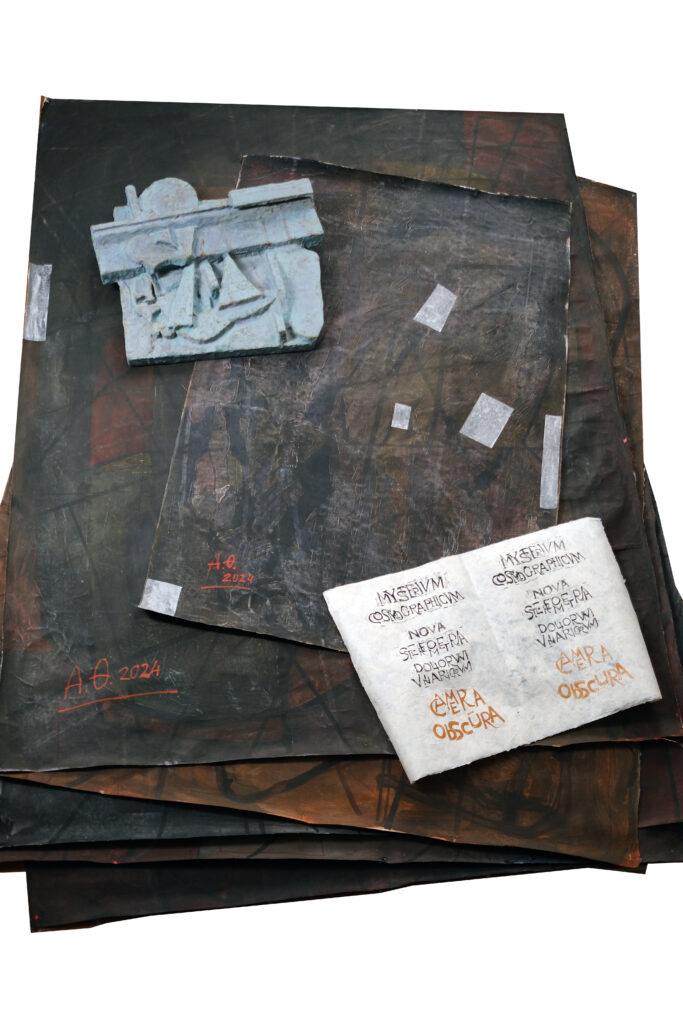
COSMOGRAPHIC MYSTERY
NEW STEREOMETRY OF WINE BARRELS
(Camera obscura)
or
Johann Kepler’s adventures in Graz, Austria
When choosing the topic of the new project, the artist paid attention to the history of the outstanding mathematician and astronomer, physicist (mechanics, optics) – Johann Kepler’s of the stay in Graz. Among Kepler’s main discoveries and researches today are his laws of planetary motion, now known as Kepler’s Laws. In his project, Oleksandr considered it`s important today to show the tragic side of the movement of works of art. If the movements of the planets occur according to a natural law (discovered by Kepler), then the movement of works of art very, very often historically takes place in illegal forms. Illegal in the context of the laws of physics, but also the context of legality. This is especially evident in the conditions of conducting various kinds of wars. Today, Ukraine, and therefore, it is safe to say that the whole of Europe is in the conditions of a brutal large-scale war.
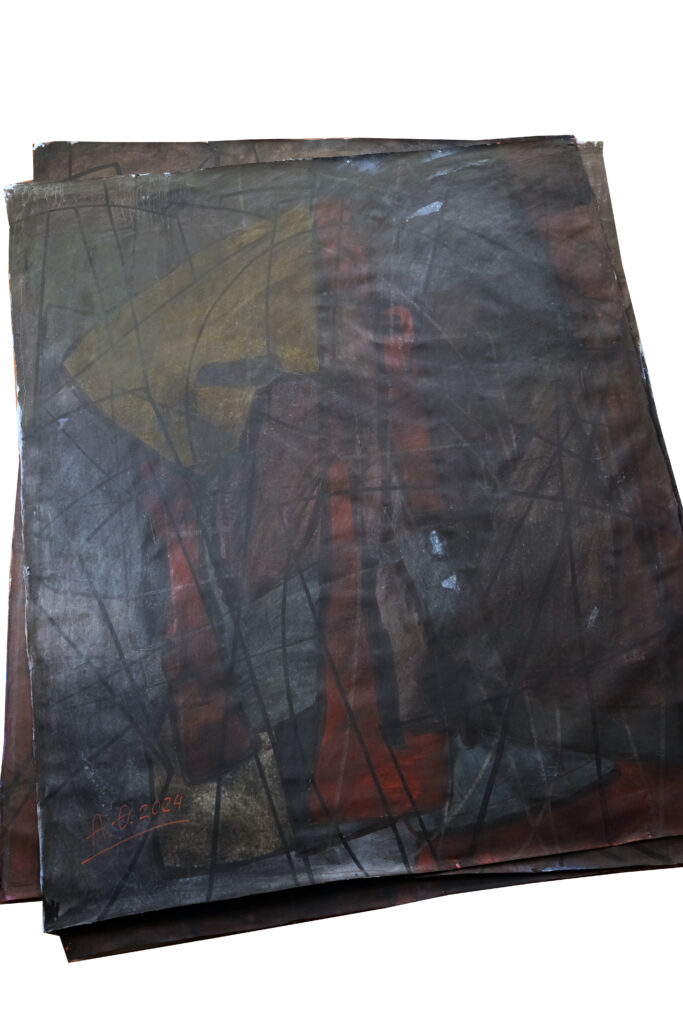
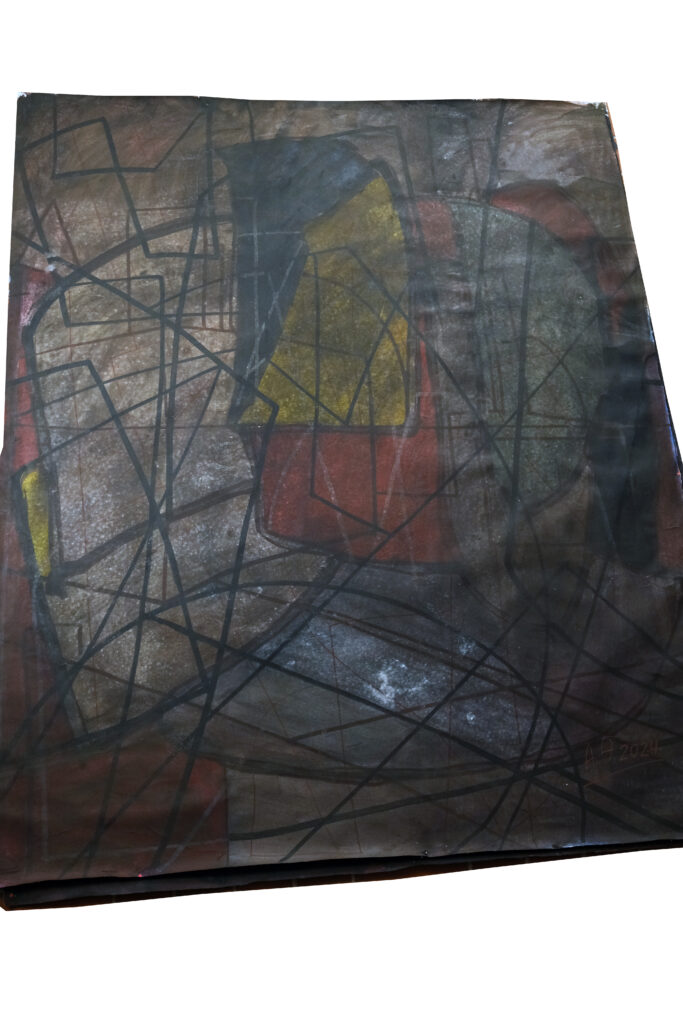
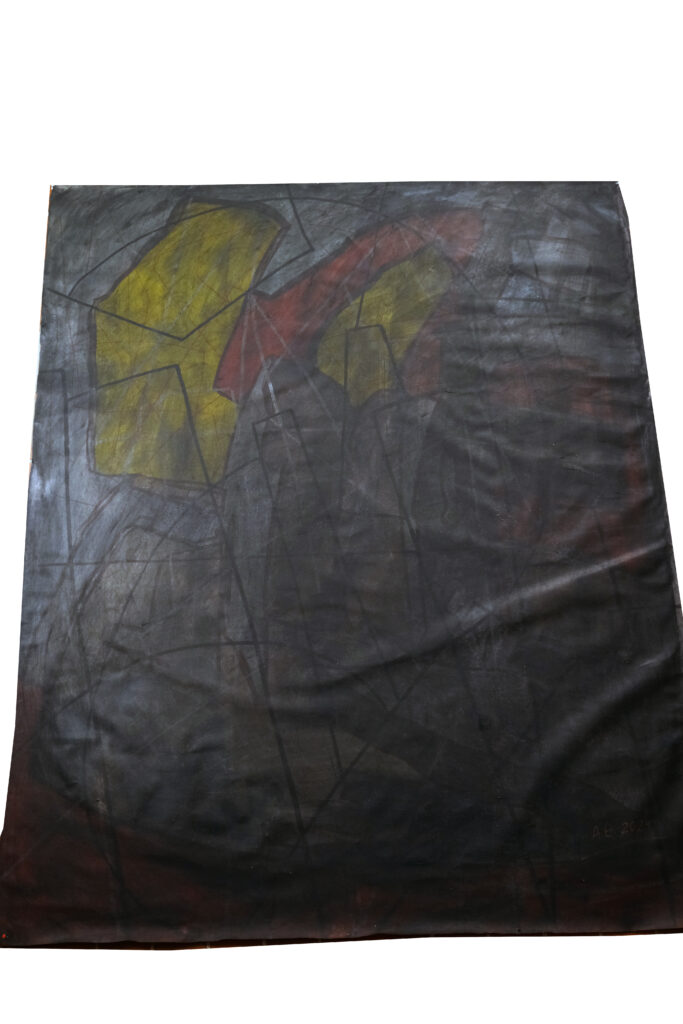
“I am a painter and I know very well that easel works on canvas live and are exhibited stretched on frame. Artists use canvases stretched on frames, much less often on canvases pasted on cardboard.
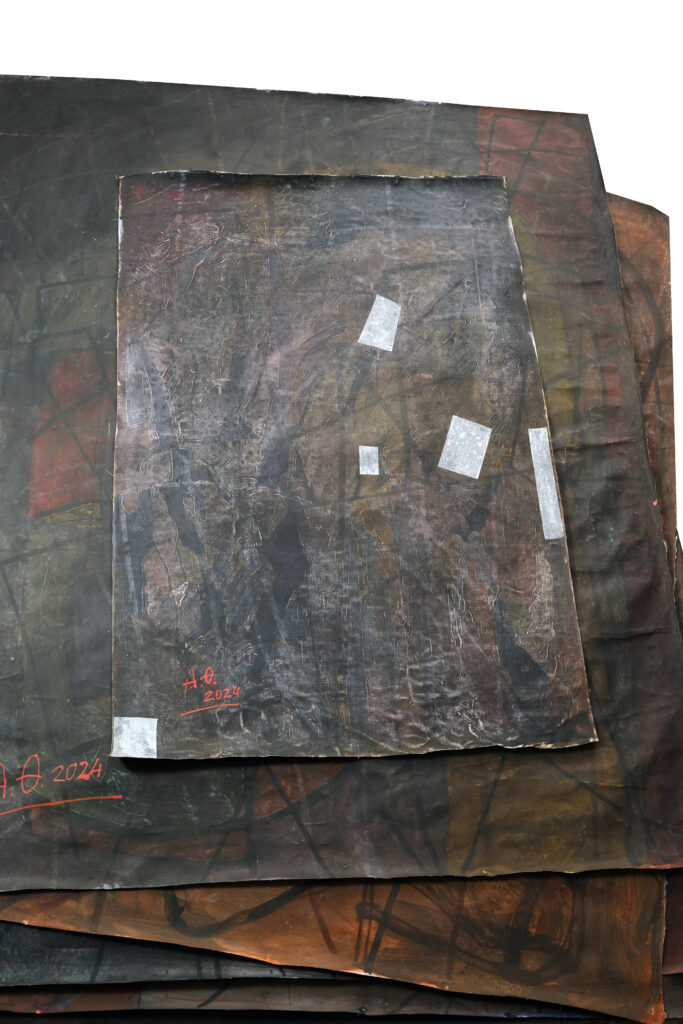
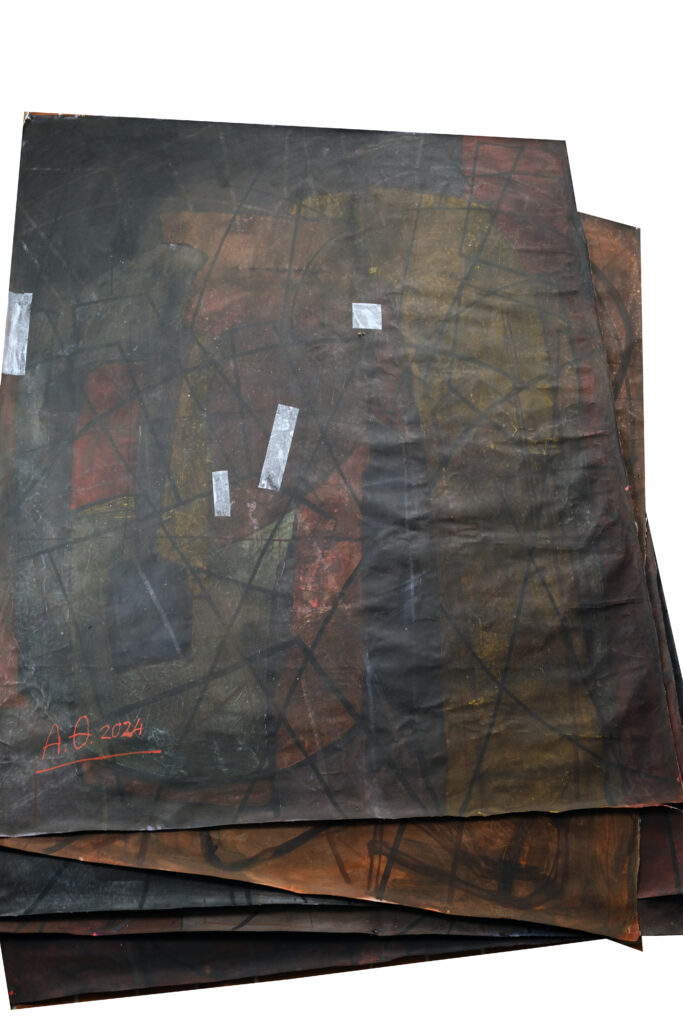
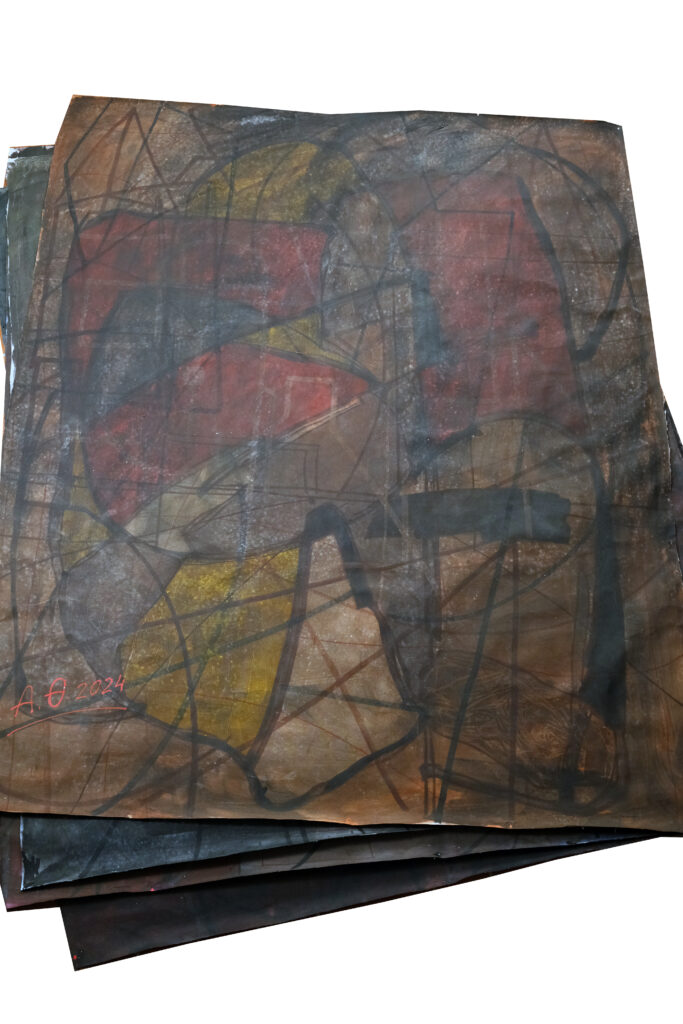
But there are rare cases when the canvases leave the frames and remain for some time in the form of some kind of “sheet”, which can be spread out on a horizontal surface, rolled into a roll, or (God forbid!) folded several times into a flat shape. It is very important to remember when this happens. And such cases are few, but almost all of them are criminal in one way or another. Criminals either for their own motives or for reasons of inadmissible negligence, or unprofessionalism. When the canvas needs to be moved when it is stolen, it is usually cut from the frame beforehand and rolled into a roll. When a large canvas is removed from the exhibition and placed in museum storerooms for a long time, then to save space in the storerooms, the canvas is wound on a shaft. There is also a case when during a hasty evacuation (for example, when the front is approaching during the war), the canvases are removed from the frames and rolled into rolls. All this is detrimental to paintings, all this is connected with the idea of stealing, hiding, or destroying the work. Works of art can be compared to planets in terms of their organicity, scale, multilevelness, and interconnection of works with each other in historical space.
I created six canvases, cut them from the frames and intend to exhibit them as if they were suddenly cut, removed from the frames and sent somewhere unknown. They can lie down, they can be folded into a roll, and broken. They exist, and their materiality is obvious, but they are defenseless and we are very concerned that the movements of the pictures removed, cut from the frames have no laws, which means they are in danger. This means that there is a war. And it should be different. And the planets move according to Kepler’s laws, it cannot be otherwise.